How are the most beloved brands in Latvia determined?
The issue of loving a brand indicates how many loyal people from society have been attracted to the specific brand. Our methodology was based on two factors – rational loyalty, which means that respondents say that they will certainly use the same product or service the next time, as well as emotional loyalty, which means that people simply claim that the brand is one of their favourite ones.
The measurement of loyalty so as to determine the most beloved brands involves a sociological research project, with fieldwork done by GfK Custom Research Baltic.1,030 respondents were asked to state their views about 355 leading brands in 47 categories.
The brands that were a part of the study were chosen on the basis of three criteria – the brand’s business results (market share, sales volumes, etc.), the brand’s investment in the media, and the trends of the brand in terms of the most beloved brands in the past.
What about Maxima’s rating?
Here we must remember that this is a measurement of the average views of the public, and it may be quite different than what the specific target audience would say. Secondly, the rankings only tell part of the story. Third, the results must be viewed in the context of events in other categories and what has happened in the past.
The study focuses on criteria that people use when they go shopping. On average, the most important criterion is price, while reputation, quality, local origins of products and other non-monetary criteria are less important. In objective terms, Maxima has preserved its price policies, and that is seen in the fact that people consider Maxima to be the second most brand in Latvia. Maxima has been equally objective in maintaining its network of shops, which is the largest one in Latvia. Accordingly, reputation is less important in terms of loyalty than price is at a time when the average purchasing power of Latvia’s residents is low. That is why people logically do not think as much about problems with the brand’s reputation.
If we look at specific audience segments, then we see differences in selection criteria and in favourite brands. Among those who deny Maxima, a far more important criterion in comparison to the average is the brand’s reputation, and these people are less sensitive when it comes to prices. If we compare the profile of those who deny the brand and the average profile of respondents, then we see that such people are younger, earn considerably more money, live in our near Rīga, have a higher education, in most cases have no children, are much more active on social networks, find it essential to express their views, and find that advertising offends their intellect. In other words, Maxima shops are boycotted by those who can afford to do so in financial terms. Because they do not feel stress about their survival, they can be much more active in terms of thinking about and communicating their social topics, not just their everyday issues. A similar situation exists if we look at loyalty toward brands. Among those who deny Maxima, Samsung is in first place in the category of telephones, while among others, the top spot goes to Nokia. Deniers choose LMT in the mobile phone category, while others plump for Bite.
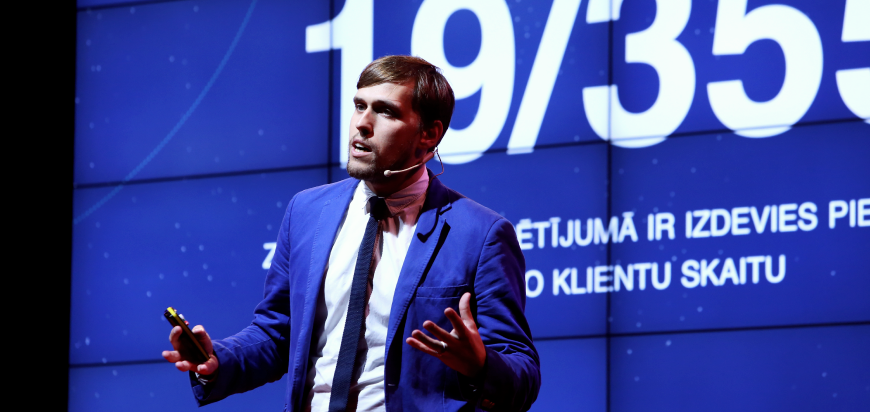
This year’s list of top brands is also interesting in that of the 335 brands that were covered, only 19 have increased their number of loyal clients. All other brands, including Maxima, experienced a decline. That means that this year’s list shows which brand dropped the most and which sectors experienced the least upheaval.
The Zolitūde tragedy was of essential importance in the retail sector, with the number of loyal Maxima clients dropping from 33.6% to 24.9%. At the same time, the number of people who say that they absolutely will not go shopping at Maxima has tripled during the past year to 10% of all respondents. That is a large audience for a mass brand such as Maxima. Accordingly we can conclude that the Zolitūde tragedy has substantially affected Maxima in that attitudes toward it have become very polarised. The number of loyal clients has dropped, and the number of active deniers and sceptics has risen.
It is also true that Maxima’s place in the ratings rose by one point because there have been changes in several other sectors that have occurred for many years and are now reflected in the survey results. In the telephone category, for instance, Nokia has always been ahead of Maxima, but this year it has slipped to 10th place. This means that during the past year, Nokia has suffered a greater drop in loyalty than Maxima has done. The last two years have been the first period during which smartphones have become mass consumption products even among “little old ladies.” Nokia, for its part, has not offered an attractive and understandable smartphone for the masses, and this is a global problem for the brand. To be sure, it is hard to compare the effects of various events on shifts in the number of loyal clients, but the fact is and remains that Nokia has suffered a greater loss. Perhaps I sound cynical here, and that is not my goal, but the data show that it is so.