Time: maximization of the moment
Don’t miss out
The phrase “I am taking the time to do my job and I have enough time for myself” is something rarely heard nowadays. This is not due only to rapid developments in technology and the swift flow of information. American lecturer and media theorist Douglas Rushkoff explains the phenomenon of fast-paced modern life with a change in the perception of time: everything is happening in the present moment. This point in time has become extremely valuable. This change of attitudes affects businesses, brand management, culture, and of course our personal lives. More and more, people are afraid to miss out on something (FOMO – fear of missing out. This is reflected in the market by an increased demand for a variety of experiences, services and products faster or parallel to one another.
Combine everything
Here are some examples of how modern companies help people maximize the moment. Instead of spending time doing the laundry, here in Riga there is an opportunity to call a “laundry courier”. At a time convenient for the customer, the service picks up the dirty laundry and brings it back the next day clean and ironed. There are more and more options for saving time and for spending this time acquiring as much experience as possible. For example, Hottub - a rooftop theatre in London combines movie watching with relaxing hot tubs and dinner. Cinema Lora in our own Sigulda offers comfortable leather sofas, as well as cocktails and snacks during films. It is possible to have dinner 50 meters above the ground at Dinner in the Sky, while spy-themed restaurants in the United States have secret passages and moving walls.
Close your eyes
Paradoxically, almost every trend results in a "counter-trend". In this case, it is the pleasure of missing out and escaping from experiences (JOMO - Joy of missing out). It’s no secret that on the weekends many leave the hustle and bustle of Riga to have a break in the countryside. At the same time, everyday life in the city has seen many new offers develop and continue to evolve, enabling customers to find peace by escaping from the overwhelming amount of information and events. Various types of relaxation services such as yoga and meditation are playing an increasing role. Using online services, anyone can indulge in a variety of meditations at their most convenient time and place, for example on www.calm.com, as well as using a number of mobile applications. The cities have adapted as well – rooftop gardens are becoming ever more popular. Those who recognize these trends quickly and manage to adapt their businesses to the changing needs of consumer habits will be the winners.
Attention: various screens
Historically, ever since the first display-featured devices became available to consumers, size and picture quality were the defining parameters for users. Today, when many of us use two or more screen-based devices every day, the technology differs not only in size, but also in function and the place they occupy in our lives.
Display archetypes
A number of global technology giants including Microsoft are well aware of this issue, developing an appropriate archetype for each device. Phones are physically closest in everyday life, and it’s no surprise that they are considered to be the most personal devices. They are seen as favourite devices, and people are open to more personal content from brands. Promotional materials in phones should not be intrusive. People perceive tablet devices as in-depth magazines designed for disclosing new information. On tablets, consumers are more open to engaging in content, games, interactive stories and legends about a brand. It is even recommended for tablet-based ads to be full screen. People view computers as the smartest devices - a big help in acquiring complex information, creating and supporting important daily activities. Computer users look for something significant to facilitate their work and daily routines. TVs still hold their role in the niche of entertainment and longer stories. Interestingly, a recent BBC study showed that 66% of people believe that the TV large screen format will never disappear. Instead, at a time when all devices are shrinking in size, people increasingly yearn for the regular wide TV. Other, smaller screens complement the TV.
Parallel screens
As the number of screens increases, it would be logical to think that the total time people spend on them remains constant, varying only by device type. However, many sources, including data collected by IAB Europe, show that the time a person spends online grows when they buy a new device. This is not surprising in the context of the multiple screen use phenomenon or multi-screening, which means that a person uses multiple screens at once to get a more in-depth experience. These types of activities are often divided into four categories according to the manner in which they complement each other.
First of all, people use devices to receive unrelated content at the same time, for example, watching television while reading e-mail on a laptop.
Secondly, people strive for an in-depth experience by using a variety of devices for related content. For example, when watching a movie on TV it could be useful to find out what other films the main characters have participated in, using a mobile device. Thirdly, people use two screens at the same time to not only get, but also discuss the content, say, when watching a sports match online on a laptop and commenting the game on Twitter using a smartphone.
Fourthly, people use screens in a sequence, beginning with one device and finishing with another. For example, when creating a presentation, the first work is done on a desktop computer, while final changes on the way to a presentation are made using a mobile tablet.
In many ways, advertising has been left behind by these shifts, thinking only about filling screen space, rather than the context in which people use the product. The winners in the battle for attention will be those who think more about user behaviour and context.
Money: The new currency
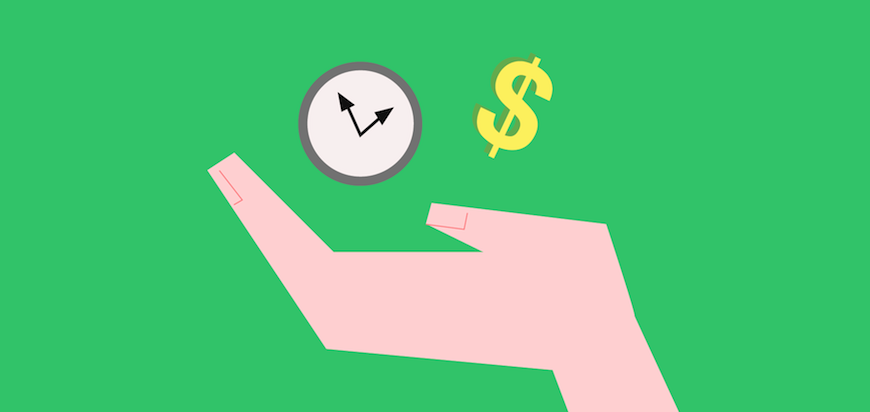
Today, when there is much talk of the changing currency, it is the right time to look back at how we perceive values and money itself. We can observe that different types of bartering options have been reborn, new alternatives to currency have emerged and many companies are willing to exchange their products and services for a valuable advice or a tweet.
Alternatives to money
We can only admire people's creativity when they have experienced the failures of today's economic and financial system. In one of the countries hit hardest by the European debt crisis, Greece, one of the first forms of transaction – barter – has been reborn. In order to avoid the high tax burden, people have decided to exchange goods and services in the form of barter. While in Zimbabwe, known for its hyperinflation, people recently created a new billing currency - prepaid minutes. But new forms of transaction are not found only in problem-affected regions. At the moment, in the United States and Western Europe, car park bartering is becoming increasingly popular – those who live in the centre rent their parking spots to those who are going to work from the city's suburbs and vice versa. Also in Latvia, the driving-together approach or carpooling is becoming increasingly popular, bringing driver and passengers together to save on longer trips.
Virtual money
This year, the Bitcoin virtual currency has drawn attention to itself, originally created to simplify the payment system for professional services in the digital environment. Although the currency is not issued or monitored by any national bank, it has its own exchange rate and anyone can invest in it. This year, Bitcoin became a fashion victim of the financial system and a huge drop followed the rapid increase in the value of currency. In any case - the total value of the virtual currency is estimated at several billion dollars, and the World Bank has drawn particular attention to it.
Communication
Alternative use of money and forms of barter can be seen in the freshest communication trends. For example, the sports brand Nike campaigned in Mexico by selling shoes based on how many kilometres the customer ran. Whereas Denmark’s prestigious Anthon Berg Chocolate Group opened a special shop last year, where chocolate bars could be exchanged for a promise to do good deeds. Needless to say, all the good work was later widely talked about in social networking profiles, thus providing valuable communication for the chocolate brand. In Latvia, tickets for the Merchant of Venice at the Latvian National Theatre were available to anyone who committed to fulfilling the promise made to Shylock, the play’s main character.
Today, when the influence of customers has become ever more powerful, businesses have the opportunity of using a variety of means of exchange. It is an opportunity not just to make money, but also to acquire a valuable contribution from their clients – advice, communication, or even in the form of production. DDB Brand Capital data shows - 55% of Latvian citizens would be willing to get involved in the creation of a company's product or service. This brings to mind one of the major quotes by Henry Ford: "A business that makes nothing but money is a poor business."